
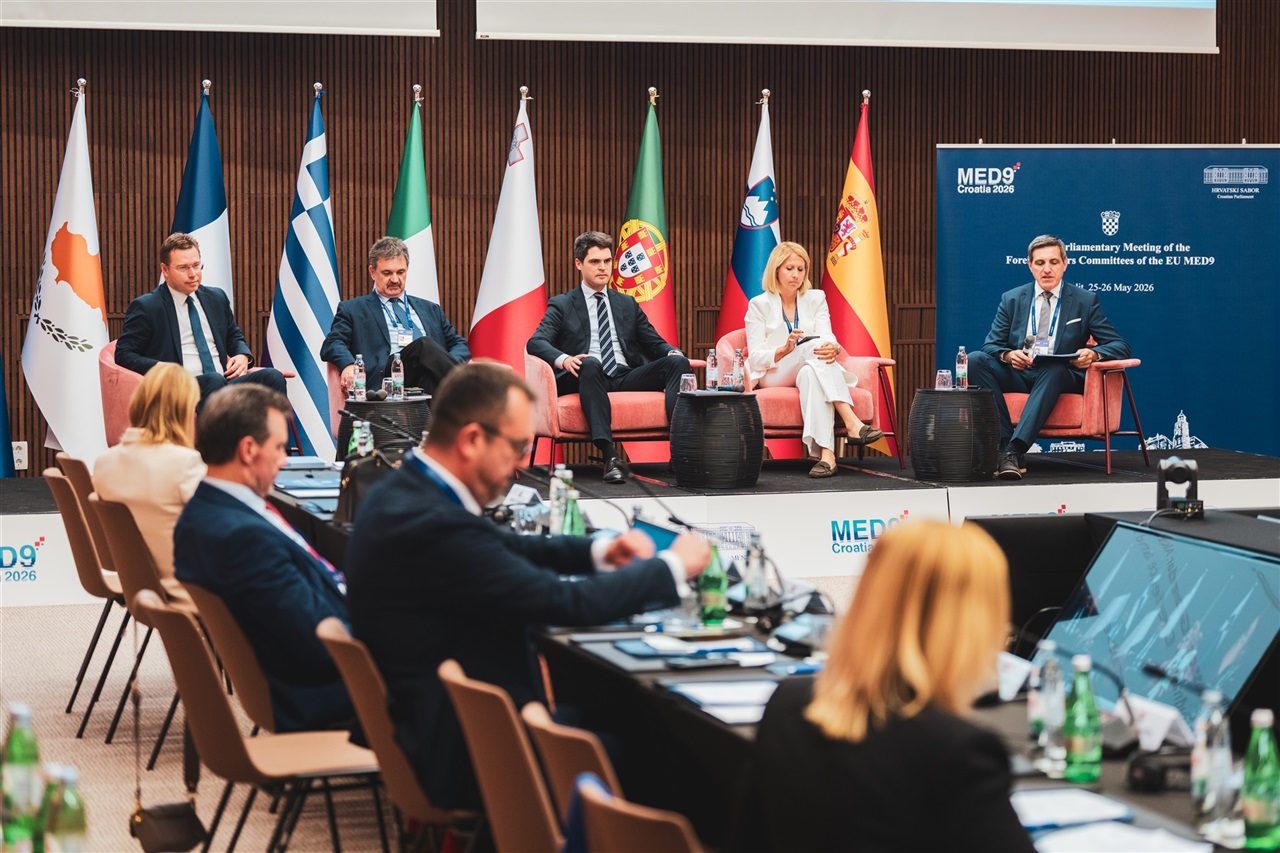
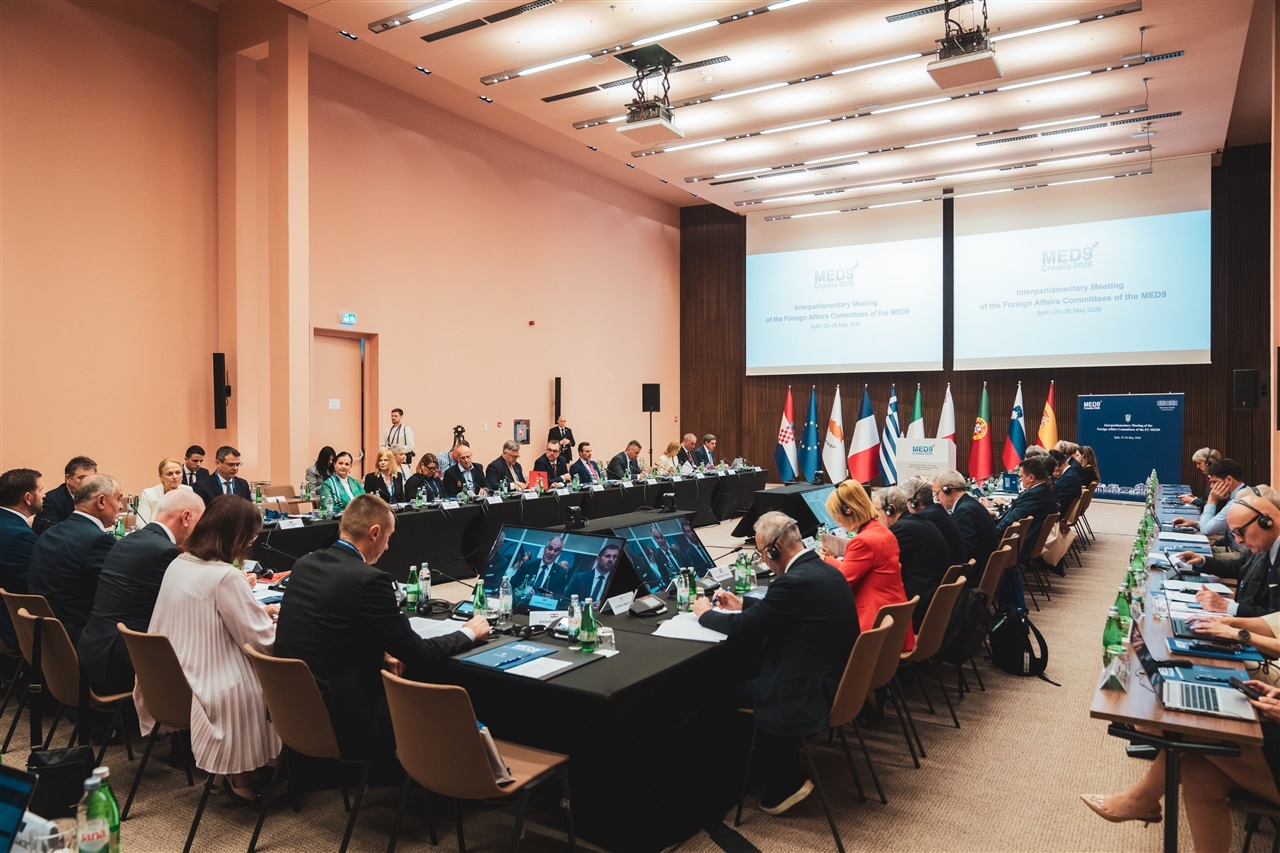
Split –The second part of the Interparliamentary Meeting of the Foreign Affairs Committees of the EU MED9 in Split featured three panels under the moderation of Domagoj Juričić, political risk management consultant and partner at MKPS consultancy, Associate Professor Gordan Akrap, Vice-Rector for International and Interinstitutional Cooperation at Dr. Franjo Tuđman Defence and Security University, and Božo Skoko, Full Professor of Strategic Communication and Vice-Rector of Algebra Bernays University. All three contributed significantly as independent experts.
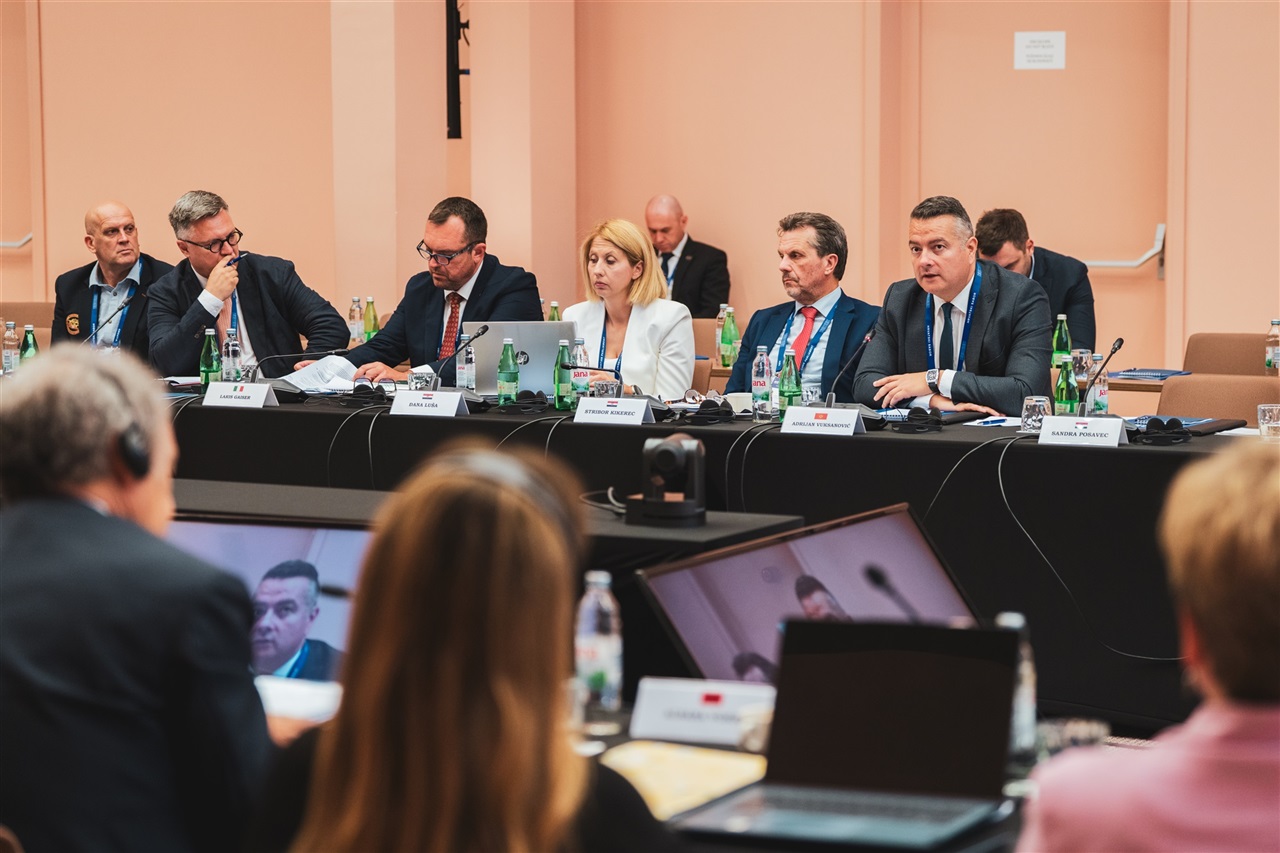
The first panel, titled “The Role of the Western Balkans in Strengthening Stability and Cooperation in the Mediterranean”, featured remarks by Albana Vokshi, Deputy Chair of the Committee on European and Foreign Affairs of the Parliament of the Republic of Albania, Marina Pendeš, Member of the House of Peoples of the Parliamentary Assembly of Bosnia and Herzegovina, Adrijan Vuksanović, Member of the Committee on European Integration of the Parliament of Montenegro, and Stribor Kikerec, Director-General for Southeast Europe at the Ministry of Foreign and European Affairs of the Republic of Croatia.
Representatives from the three Western Balkan countries aspiring to join the European Union—and to participate in the MED group in the future-shared their experiences and perspectives as opposition political figures committed to the European future of their nations. The panel emphasized that the stability of the Western Balkans depends on the implementation of reforms essential for advancing on the path towards the EU and alignment with the EU’s Common Foreign and Security Policy. The participants reaffirmed strong support for the EU integration process of Western Balkan countries, stressing that enlargement must be based on individual merit and fulfilment of membership criteria. Croatian representatives reiterated Croatia’s firm support for the region’s EU path, including the provision of technical assistance at all institutional levels.
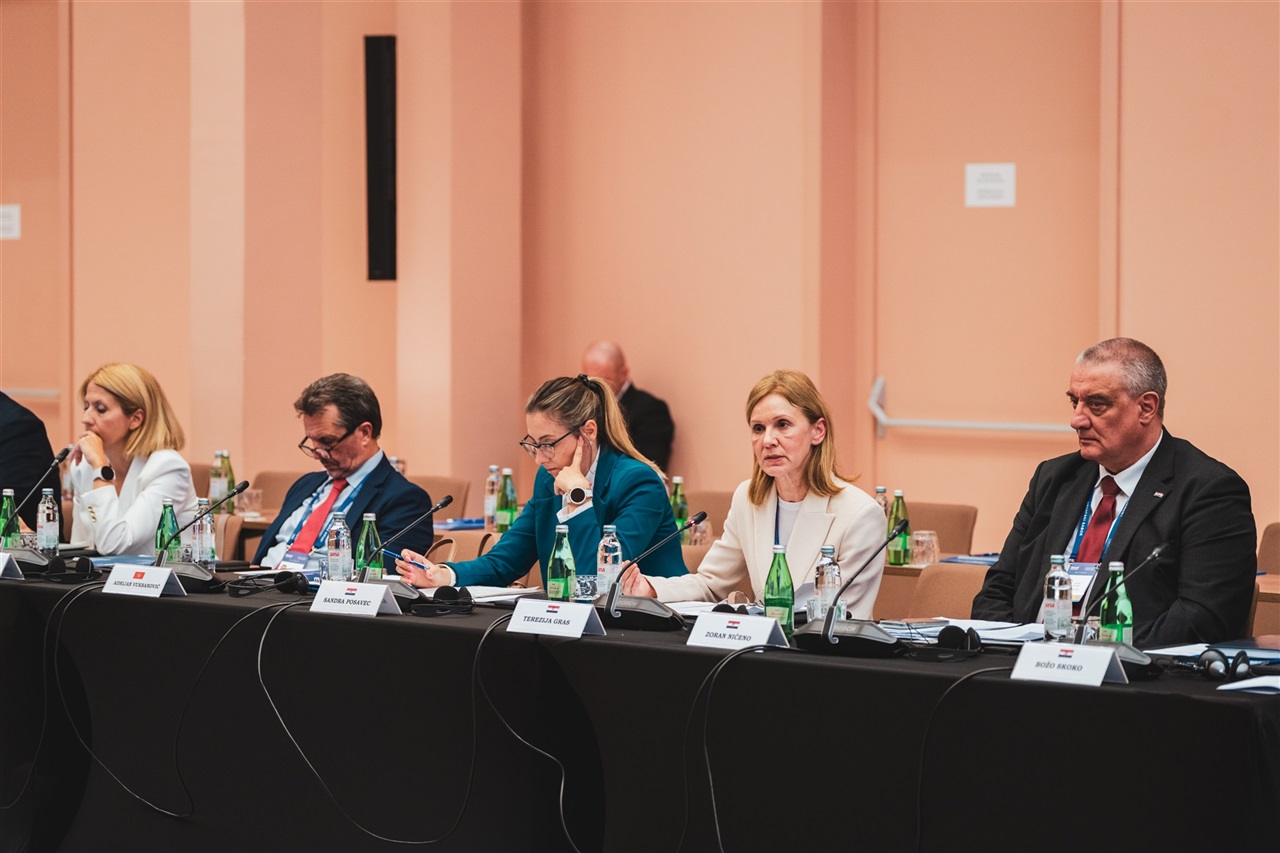
The second panel focused on security, sustainability, and resilience in the Mediterranean. Introductory remarks were delivered by Zoran Ničeno, Assistant Chief of Police and Head of the Border Police Directorate at the Croatian Ministry of the Interior, Terezija Gras, Director–General for Europe at the Ministry of Foreign and European Affairs of Croatia, Associate Professor Laris Gaiser, from the Catholic University of the Sacred Heart in Milan, and Sandra Posavec, Director-General for Sustainable Development and Public Tourism Infrastructure at the Croatian Ministry of Tourism and Sport.
The discussion highlighted the Mediterranean as a historical crossroads of civilizations, trade, and cultural exchange, but also a region marked by conflicts and geopolitical tensions. As a key maritime trade route for the 550 million people living in the region—and for many others who heavily rely on its security—the Mediterranean faces major security, economic, environmental, and social challenges that directly affect Europe and its wider neighbourhood, while also serving as a source of energy security and stability for the states surrounding it, as well as for those indirectly linked to the region. The panel underscored the importance of the Pact for the Mediterranean and reaffirmed the need for strong partnerships among Mediterranean states to safeguard EU interests beyond its borders.
The third and final panel addressed the geostrategic importance of the Mediterranean. Contributions were made by Karlo Ressler, Member of the European Parliament; Professor Đana Luša from the Faculty of Political Science in Zagreb; Marko Pavić, Head of the Croatian Parliament’s Delegation to the Parliamentary Assembly of the Council of Europe; and Associate Professor Gordan Akrap.
Speakers emphasized the geopolitical importance of the Mediterranean as well as its role as a link between Europe, Africa, and the Middle East, serving as a vital energy and transport corridor and a route for migration flows. They highlighted the need to strengthen regional and multilateral cooperation among Mediterranean countries to effectively address issues of sustainable development, energy, and security. The discussion concluded that long-term EU investment in the stability of Southeast Europe is essential, and that the region’s future will depend heavily on Europe’s ability to manage the Mediterranean space and the crises emerging from it.
The Croatian Parliament and its Foreign Affairs Committee launched the parliamentary dimension of MED9 to demonstrate that this group represents far more than a geographically defined area. Within this framework, MED9 can and should articulate shared interests toward partner countries in Europe, while also encouraging their own governments to advance the objectives set within this cooperation format.
Participants agreed on the conclusions of this first meeting within the MED9 parliamentary dimension, expressing determination to further strengthen this political grouping of influential EU member states. Their shared priorities include creating a secure environment for all and upholding the principle that Western Balkan countries should advance toward EU membership based on individual merit. They also agreed on the need for an even stronger contribution of parliamentary diplomacy to Mediterranean-related discussions.
In closing, the Chair of the Foreign Affairs Committee, Mr. Krstulović Opara, thanked all participants for their constructive dialogue and reaffirmed the agreed conclusion that the MED9 parliamentary dimension should continue through future interparliamentary meetings as an essential tool for advancing Europe’s Mediterranean policy.