
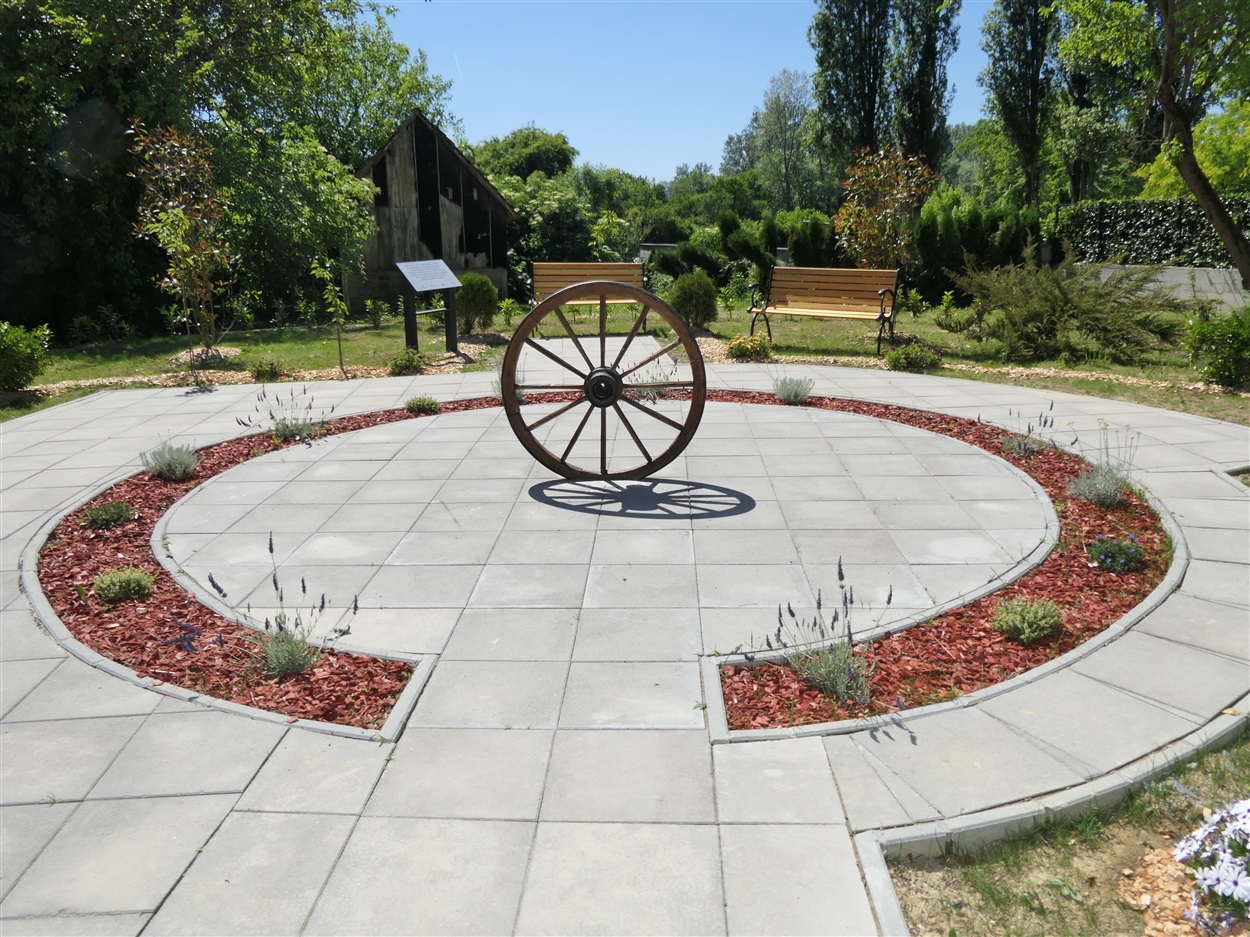
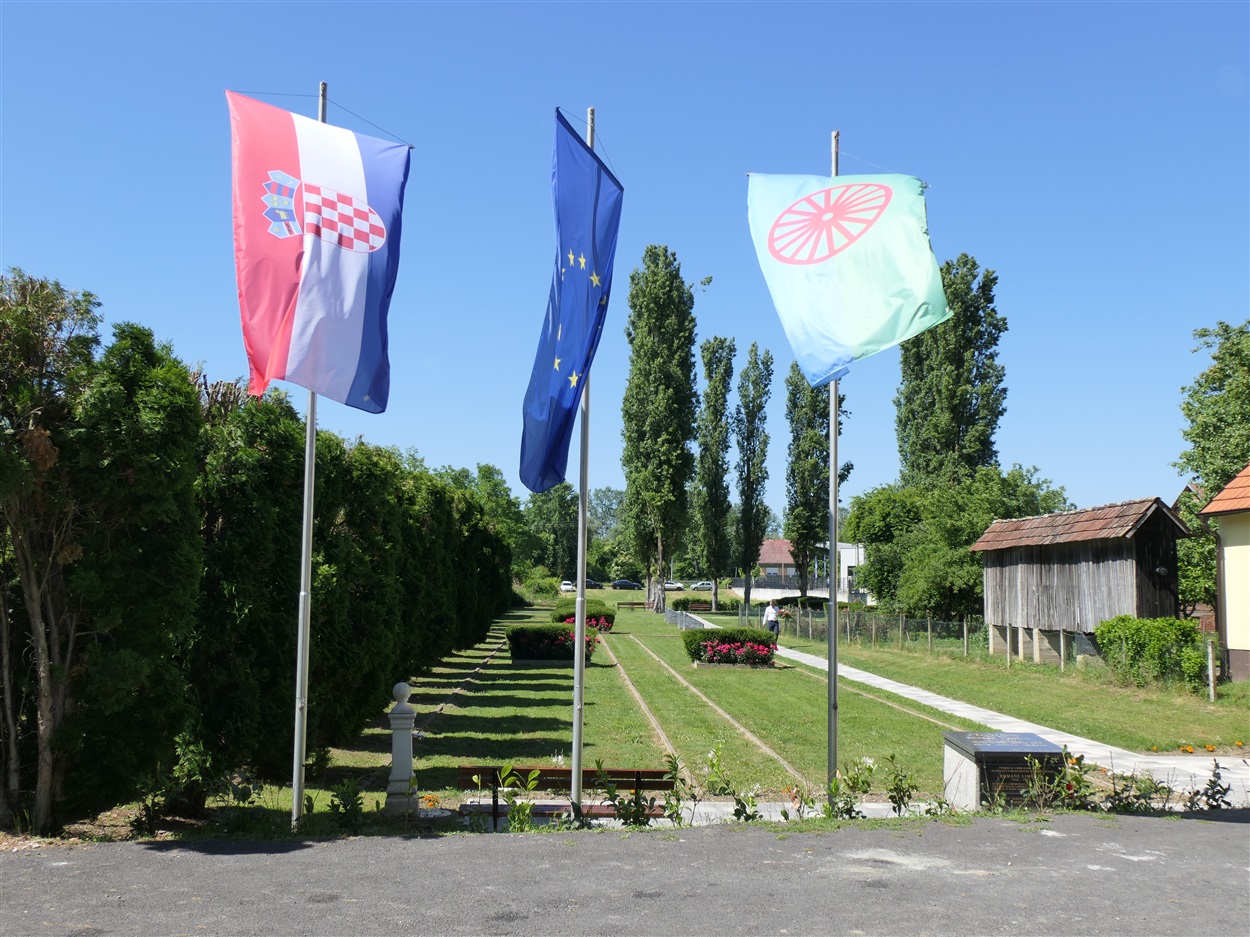
Zagreb - International Roma Holocaust Memorial Day (Samudaripen) was marked on Sunday at the Roma Memorial Cemetery in Uštica near Jasenovac, where the "Amare, amale" Peace Park, dedicated to friends of Roma who helped the community during its most difficult times, was also opened.
Speakers stressed that Roma are an inseparable part of Croatia's history and cultural heritage and that efforts must continue towards their full integration and equality in Croatian society.
The memorial day is observed on 2 August in memory of the night of 2-3 August 1944, when the last group of 2,897 Roma were killed at the Nazi concentration camp Auschwitz. Croatia's central commemoration is traditionally held at the Roma Memorial Cemetery and the Memorial Centre in Uštica near Jasenovac.
Ružić: Looking properly at the past helps create a better future
"By looking properly at the past, we create a better future," said government representative Alen Ružić, the Minister of Labour, Pension System, Family and Social Policy.
He said the Croatian government, in cooperation with the Roma minority, was creating conditions for a society based on tolerance and universal values, where everyone had equal rights regardless of political or ideological differences.
"We support a culture of remembrance. The Uštica Memorial Centre is a symbol of the values we cherish and a message that the suffering of Roma must never be forgotten. Today's commemoration is the largest gathering of the Roma minority in Europe and a strong confirmation that Croatia stands alongside European countries that nurture a culture of remembrance," Ružić said.
Kajtazi: Remembrance is the responsibility of the living
Roma minority MP Veljko Kajtazi recalled the suffering of Roma during the Second World War and the construction of the Memorial Centre and Roma Memorial Cemetery in Uštica, which began in 2012.
"History teaches us that the greatest tragedies do not arise only from hatred, but become possible when society becomes indifferent. Uštica reminds us how fragile human dignity is and how great society's responsibility is to protect it when it is most threatened," Kajtazi said.
Kajtazi stressed that the commemoration honoured the Roma victims of Samudaripen while also affirming that their fates and sacrifice are part of Europe's shared history.
"Remembrance is not only an expression of respect for the dead, but also the responsibility of the living," he said.
This year's commemoration was particularly significant due to the opening of the "Amare, amale" Peace Park, dedicated to people who helped Roma during the most difficult times.
"They preserved what was hardest to preserve – their own humanity. They helped the person beside them. At a time when silence was safer than solidarity, they chose compassion and responsibility. We owe them great gratitude for that," Kajtazi said, adding that their actions remain a guide for society today.
He also stressed that the ability to distinguish between good and evil was the foundation of every democratic society.
He thanked the numerous delegations, guests and members of the Roma community for attending, while expressing regret that the country's highest officials had not been present.
Wreaths were laid at the monument to Roma victims in Uštica by representatives of the president, parliament speaker and prime minister, while a joint prayer was led by representatives of the Catholic Church, the Serbian Orthodox Church and the Islamic Community.
21 mass graves at Ustasha-run camp site in Uštica
The Memorial Centre includes the "Wall of Pain" bearing the names of 16,173 Roma victims, as well as 21 mass graves. A monument has also been erected in the Victims' Alley to Hajrija Mejri Mihaljić, the only Roma woman recognised as a Righteous Among the Nations. The memorial complex has been expanded this year with the addition of the Peace Park.
The mass and systematic persecution of Roma in the Ustasha-governed Independent State of Croatia (NDH) began in May 1942. By the end of July that year, almost all Roma from the NDH territory had been deported in cattle wagons to Jasenovac and then transferred to the Uštica camp, which the Ustasha authorities called the "Gypsy camp".
Unlike most other prisoners, Roma arrivals were not registered by name but by the number of the wagon in which they were transported. As no complete records of imprisoned Roma were kept, and many Roma were not entered into civil registers or other official records at the time, the exact number of those killed will never be known. The scale of the genocide is illustrated by the fact that, according to the 1948 census, only 405 Roma lived in what is now Croatia.
According to official data from the Jasenovac Memorial Site, at least 16,173 Roma were killed at the Uštica camp between 1941 and 1945, and 21 mass graves have been identified in the area.