
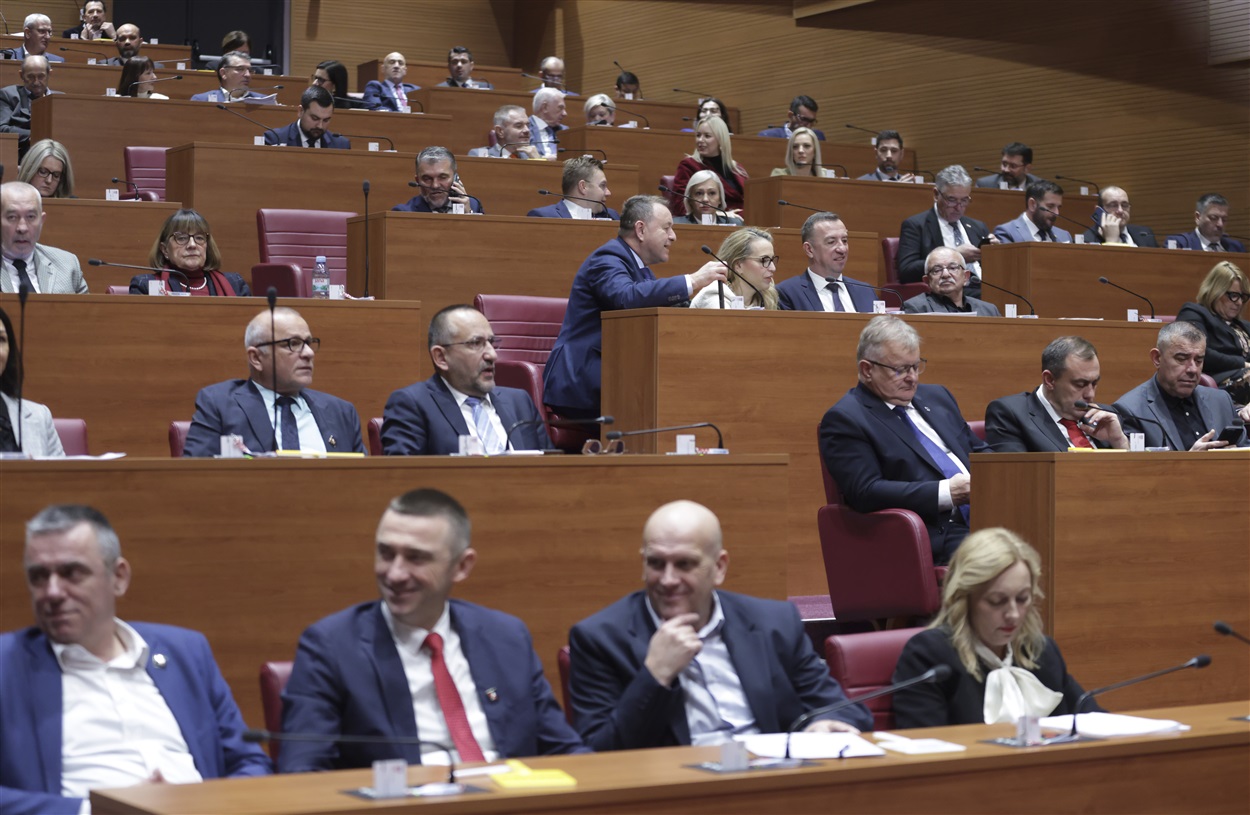
Zagreb - Parliamentary groups on Thursday debated the Bill on International and Temporary Protection, with left-wing MPs stressing that Croatia must protect its borders without undermining human rights, while right-wing MPs expressed concerns about a loss of sovereignty.
Sanja Bježančević (SDP) said the revised proposal shows progress compared to the first reading, especially regarding protections for unaccompanied minors. She highlighted stronger safeguards, including the urgent appointment of guardians, age-appropriate information, access to interpreters, improved age assessments, and mandatory training for staff working with children. However, she criticised the fact that access for UNHCR and NGOs still depends on agreements and ministerial discretion, meaning oversight is functional but not fully institutionally guaranteed.
Draženka Polović (We Can!) welcomed the restored possibility of UNHCR and human rights organisations participating in asylum hearings, but noted that the competent ministry still decides on their involvement case by case, which she argued should not be an administrative issue.
Anka Mrak Taritaš (Centre/NS/GLAS) said the debate is fundamentally about whether the EU can protect its borders while remaining faithful to its founding values, stressing that migration is not a temporary crisis but a long-term geopolitical, demographic and economic reality. She argued that while borders must be controlled, EU policy cannot be reduced to walls and security measures, and must uphold human dignity, rights and solidarity.
Dalibor Paus (IDS and partners) warned that stricter rules – such as expanded surveillance, movement restrictions, and device checks – must not violate human rights, privacy or proportionality, even if aimed at improving control.
Milorad Pupovac (SDSS) said the bill is improved compared to the original proposal, particularly regarding UNHCR involvement and protections for minors, but criticised the Interior Ministry’s discretionary power over which organisations may participate. He said the SDSS will support the bill, describing it as a balanced response to current migration challenges.
Stipan Šašlin (HDZ) argued that Croatia, as an EU member state, must apply EU rules and that the amendments will speed up procedures, reduce abuse, and allow quicker returns of those not eligible for asylum, improving overall migration control.
Independent MP Nino Raspudić said there were around 16,400 illegal border crossings in 2025 and about 3,890 irregular residents in Croatia. He argued the situation has improved since 2022–2023 due to significant investments in border protection and surveillance, as well as in providing concrete financial assistance to non-EU countries that are sources of migration. “But most importantly, Europe has sent a message that irregular and uncontrolled migration is no longer welcome and that it is becoming less and less worthwhile to embark on such a dangerous journey,” he said.
Božo Petrov (Bridge) accused the government of framing the debate in a false dilemma – either you accept everything in the proposal or you are against it. “Bridge is against the use of Europe as a cover for the government’s irresponsibility, and we will not accept the claim that anyone who criticises this bill is against Europe, or that anyone who calls for security is against humanity,” he said.
Damir Biloglav (DOMiNO and Sovereignists) addressed the long-term causes of migration and Europe’s future, arguing that the only sustainable solution is a complete change in Europe’s value system. He claimed that Europe has abandoned its Christian roots and the “culture of life,” and is instead moving toward a “culture of death” and gradual decline.
He also said Europe would do better to invest part of its wealth and living standards into migrants’ countries of origin, arguing that people would be less likely to leave if conditions there were closer to European living standards.