
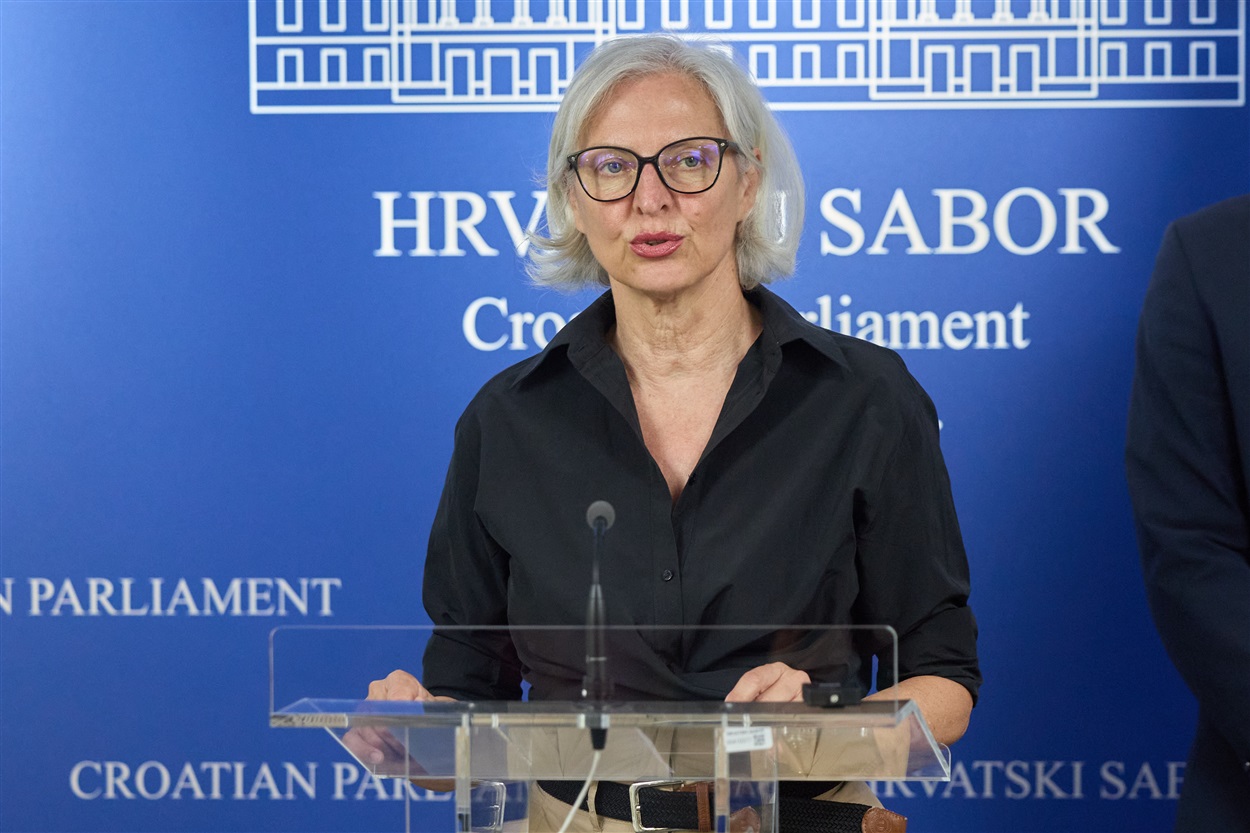
Zagreb - The Sabor’s Environment and Nature Conservation Committee will hold an extraordinary session in the city of Gospić on Monday to discuss the case of an illegal waste dump in Lika.
The session was originally scheduled for Friday but was postponed due to the devastating Omiš fire.
Environment and Green Transition Minister Marija Vučković, Health Minister Irena Hrstić and Chief State Prosecutor Ivan Turudić have been invited to attend.
The three-point agenda will begin with briefings from the environment and health ministries on measures taken, environmental and public health risks, the planned remediation method, and its timeframe and cost.
Last Friday, Vučković said in Gospić that drinking water was safe.
The Environment Ministry has contacted 60-70 foreign operators about potentially handling waste from the illegal landfill.
A second tender for the remediation of around 4,500 tonnes of hazardous waste has been extended until 25 August. A separate tender has also been launched for the remediation of 650 tonnes of non-hazardous waste stored in bags, with the same deadline for bids.
Opposition parties are calling for an extraordinary session of parliament over the waste crisis in Lika and have announced plans to subsequently launch a no-confidence motion against the government.
Also on the agenda is a bill amending the Criminal Code to introduce ecocide as the most serious environmental offence.
MPs from the ruling majority have also announced they will attend the session in Gospić.
The Gospić case has been Croatia’s main political issue since early August, when the Office for the Suppression of Corruption and Organised Crime (USKOK) published an environmental expert report on the site of an industrial complex at Bilajska 50 in Gospić, along with an addendum prepared by the University of Zagreb’s Faculty of Geotechnical Engineering.
Civic groups had previously warned about the illegal dumping of various types of waste, saying it posed a threat to the environment and human health.
An expert assessment of the former PPK Velebit site in Gospić found around 37,000 tonnes of waste, almost 33,000 tonnes of which had been buried.
The waste is of a heterogeneous industrial composition, with large amounts of plastic, rubber, textiles and metal particles. Microplastics, elevated concentrations of heavy metals and ecotoxic properties were also detected. PFAS compounds, known as "forever chemicals", were found in groundwater downstream from the site, although this water is not part of the public water supply.