
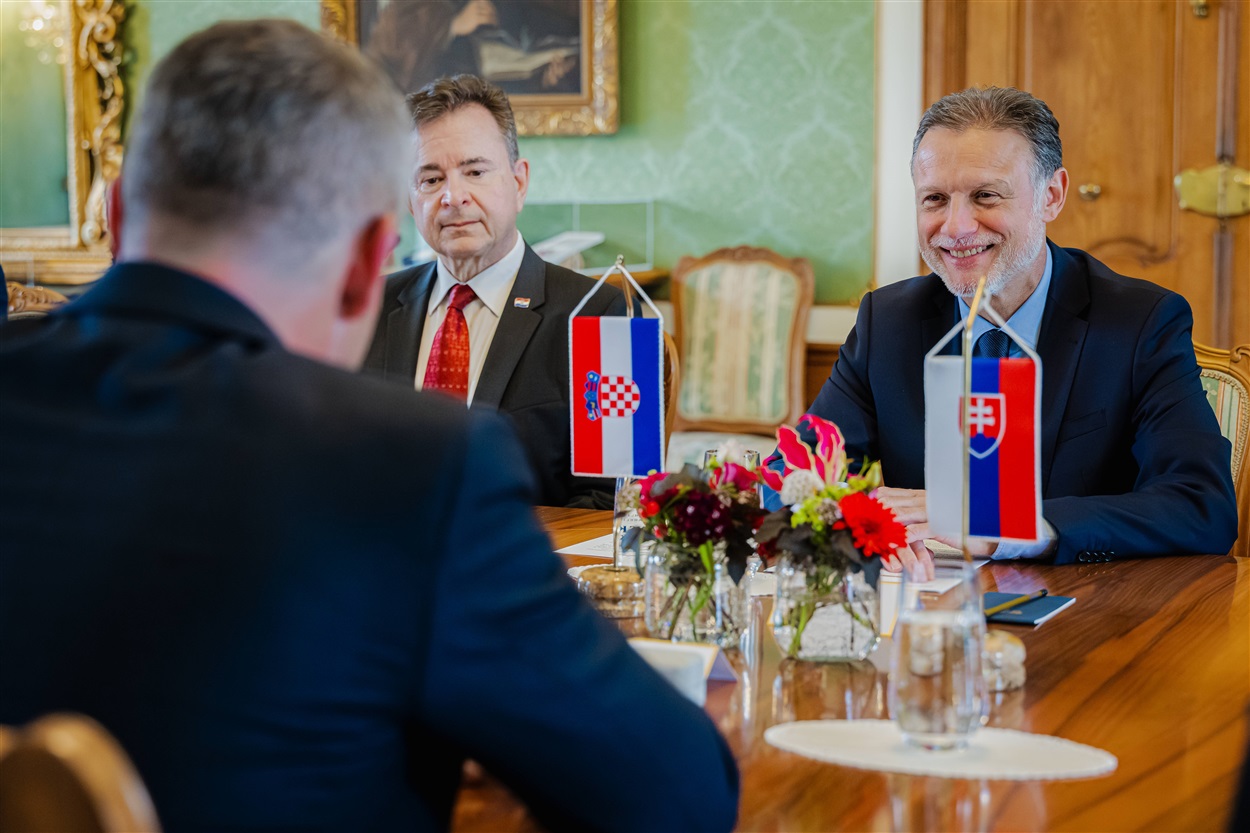
Zagreb - Competitiveness and cohesion are not mutually exclusive, Croatian Parliament Speaker Gordan Jandroković said on Friday, commenting on the EU's next multiannual financial framework (MFF) at an expanded meeting of Visegrád Group parliamentary speakers in Bratislava.
Croatia recognises the need for greater investment in innovation, the digital transition, security and defence, as well as the EU's strategic autonomy and competitiveness, Jandroković told the meeting of speakers from Visegrád Group member states and other "Friends of Cohesion" countries.
However, for us, competitiveness and cohesion are not mutually exclusive. It is therefore essential that cohesion, together with agriculture and fisheries, continue to receive adequate funding, he said.
The Sabor Speaker stressed that these policies were directly linked to demographic challenges, which are a strategic priority for Croatia.
We are fully aware that sound cohesion policy creates opportunities for young people to build their future in the communities where they were born, Jandroković said.
EU member states are negotiating the next MFF for 2028-2034, with the aim of reaching an agreement by the end of this year.
Croatia supports an ambitious and balanced budget that provides adequate funding for both new priorities and the EU's long-standing policies, Jandroković said, adding that Croatia is for a budget that addresses today's challenges without abandoning our fundamental values of solidarity.
Certain proposed cuts to the MFF are certainly a cause for concern, Jandroković said.
The Irish EU Council Presidency has proposed an EU seven-year budget of €1.826 trillion for 2028-2034, an 8% reduction from the European Commission's €1.985 trillion proposal, amounting to €159 billion less. The proposed cut is considerably smaller than those sought by net contributor countries.
Unity key to success in budget negotiations
The parliamentary speakers of the Visegrád Group, comprising Hungary, Poland, Czechia and Slovakia, signed a joint declaration at a meeting in Bratislava on Thursday.
Slovak Parliament Speaker Richard Raši said the declaration called for postponing the introduction of the EU's second emissions trading system (ETS2) until 2030, supported nuclear energy and the automotive industry, called for fairer access to EU programmes and funding, and backed EU enlargement, according to Slovakia's TASR news agency.
On Friday, representatives of parliaments from 17 EU member states belonging to the informal Friends of Cohesion group, including Croatia, joined the meeting in an expanded V4+ format.
Discussions focused on the EU's next long-term budget for 2028-2034, funding for regional development, agriculture and common European priorities.
Addressing the meeting on Friday, Jandroković said unity among the Friends of Cohesion was essential to success in the budget negotiations, adding that a common position gave the group greater political weight.
While acknowledging that national parliaments had limited influence over the negotiations, he said they could still play an important role by scrutinising proposals, setting out priorities and helping to build political understanding and public support for a secure future for Europe.
V4+
Participants in the Bratislava summit are expected to adopt a joint statement later in the day.
On the sidelines of Friday's meeting, Jandroković will hold separate talks with his Hungarian counterpart, Ágnes Forsthoffer, and Annita Demetriou, Speaker of the Cypriot House of Representatives, his office said.
The Visegrád Group was founded in 1991 by Hungary, Poland and Czechoslovakia to promote shared economic interests, encourage free trade, develop transport infrastructure and strengthen energy cooperation.
The alliance, currently chaired by Slovakia, has become less cohesive since Russia's 2022 invasion of Ukraine, amid differences over the war, particularly Hungary's stance under former Prime Minister Viktor Orbán.
His successor, Péter Magyar, this year raised the possibility of expanding the V4 to include several other countries, including Croatia.
However, at a meeting in June, he said the Visegrád Group had no immediate plans to admit new permanent members, although the V4+ format could be used to invite guests, including non-EU countries, to discuss various issues.