
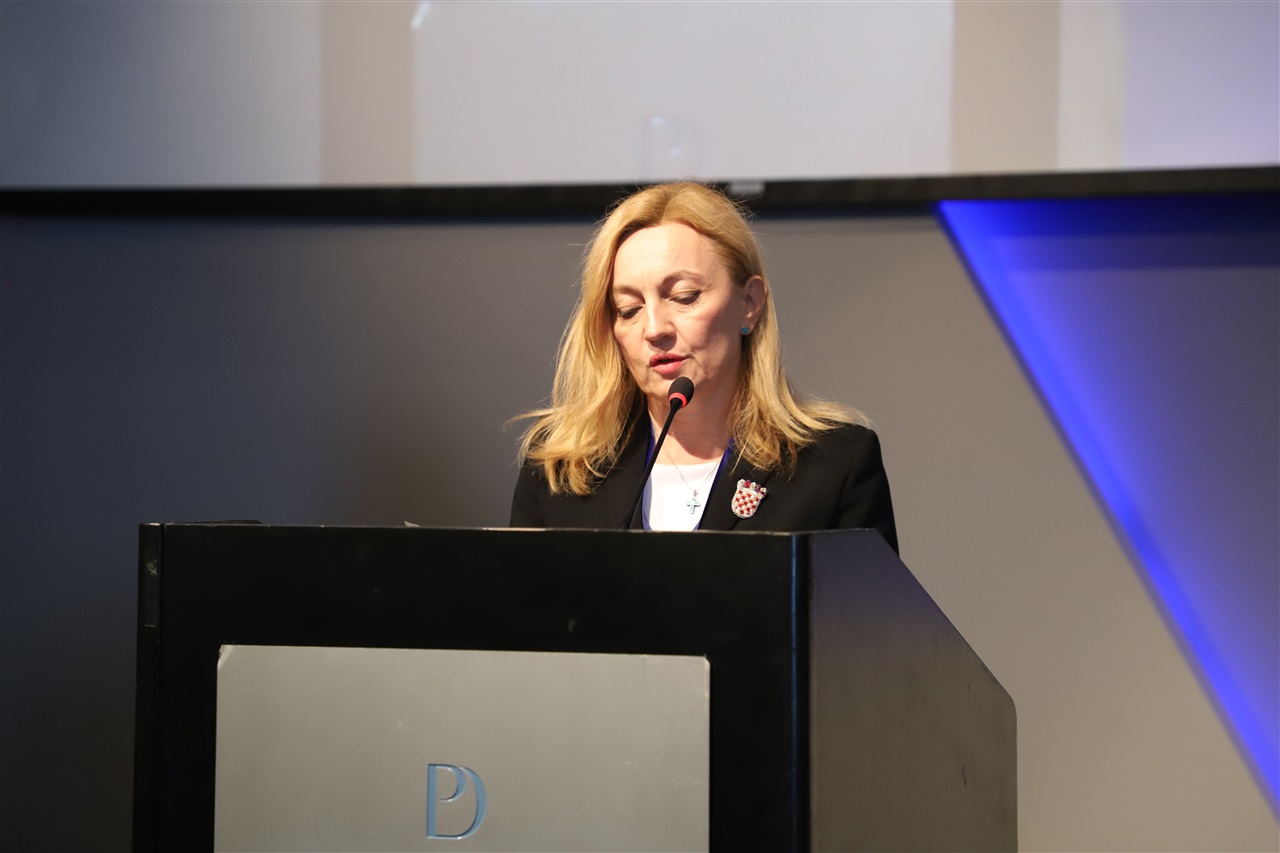


Dubrovnik – The second panel of the Interparliamentary Conference “From Field to Sea – A Common Vision for EU Food Security and Strategic Autonomy” focused on preserving the competitiveness of Mediterranean fisheries and the vitality of island communities. Hosted in Dubrovnik, the conference was organized by the Croatian Parliament’s Committee on Agriculture as part of the parliamentary dimension of Croatia’s presidency of the EU MED9 group.
Costas Kadis, European Commissioner for Fisheries and Oceans, addressed the participants by video message, stressing that fisheries and aquaculture play an important role in food security, employment in coastal communities, and in strengthening Europe’s resilience and strategic autonomy. He referred to the Vision for Fisheries and Aquaculture towards 2040 and the forthcoming European Ocean Act, which should provide a longer-term framework for a competitive and sustainable sector.
He also highlighted the importance of European investment in fisheries infrastructure, citing the modernisation of the Brižine fishing port in Croatia as an example of how infrastructure, services and working conditions can be improved. He stressed that the proposal for the next Multiannual Financial Framework recognises the strategic role of the blue economy in strengthening the European Union’s competitiveness and resilience.
Domagoj Mikulić, State Secretary at the Ministry of Regional Development and EU Funds and moderator of the panel, stressed that Mediterranean fisheries are not merely an economic activity, but an integral part of the identity, tradition, food security and way of life of coastal and island communities.
He stressed that securing the future of the sector requires striking a balance between protecting marine resources and ensuring the economic and social viability of fishers, particularly those engaged in small-scale coastal fisheries. Among the priorities, he highlighted investment in fleet modernisation, energy efficiency, digitalisation, aquaculture, processing and innovation, alongside efforts to strengthen local supply chains. Consequently, Croatia advocates strong and clearly defined European financial support for fisheries beyond 2027, while taking into account the specific characteristics of the Mediterranean.
Stylianos Mitolidis, representing the European Commission’s Directorate-General for Maritime Affairs and Fisheries, noted that the EU funding model proposed for the 2028–2034 period provides scope for stronger support for sustainable fish stock management, the green transition, and the economic sustainability of fisheries and aquaculture.
Under the new budget model, at least €2 billion would be earmarked specifically for the key objectives of the Common Fisheries Policy, including sustainable fisheries and aquaculture, the protection and restoration of the marine environment, and market organisation. Member States will also be able to provide additional funding for fisheries, coastal communities and the blue economy.
Mitolidis placed particular emphasis on the need to support small-scale coastal and island fisheries, the modernisation and energy transition of the fleet, and generational renewal in the sector. He also stressed the importance of a level playing field, ensuring that products from third countries entering the EU market meet strict requirements for traceability, legality and sustainability.
Professor Branko Glamuzina of the University of Dubrovnik pointed out that Croatian fisheries have undergone profound structural changes over the past 25 years. These have been marked by declining catches, a fall in the number of active professional fishers and a steadily ageing fishing population.
He particularly highlighted the importance of small-scale coastal fisheries in sustaining life on islands and in coastal communities. He stressed that losing experienced fishers means not only losing jobs and fishing capacity, but also the loss of traditional knowledge of the sea, fishing grounds and local conditions – knowledge that is extremely difficult to recover once lost.
According to Glamuzina, the conventional concept of market competitiveness is not always applicable to small-scale coastal fisheries, as they cannot compete on an equal footing with large fleets. Their importance extends far beyond their economic role in providing income and employment: they also sustain local communities and preserve traditions and knowledge. Future fisheries policy should therefore provide dedicated support mechanisms for small-scale island fishers, including safer and more energy-efficient vessels, more selective fishing gear and more stable incomes.
He concluded that the future of Croatian fisheries should be built on a combination of sustainable capture fisheries, competitive aquaculture and modern processing. Rather than maximising catches, the focus should be on generating the greatest long-term value from a limited and sensitive marine resource, while safeguarding people, knowledge and vibrant fishing communities.
Marin Mihanović, representing the General Fisheries Commission for the Mediterranean, presented figures showing that fisheries and aquaculture in the region together produce more than two million tonnes of products, provide more than 1.1 million jobs and generate revenues of exceeding USD 21 billion.
There are around 72,000 fishing vessels in the Mediterranean, most of them engaged in small-scale coastal fisheries. Aquaculture production has doubled since 2013. At the same time, the share of assessed fish stocks subject to overfishing has fallen from 87% to 52%, demonstrating progress in fisheries management. The Adriatic was highlighted as a positive example, in particular the conservation measures in the Jabuka/Pomo Pit area, which have helped reduce fishing pressure and improve stock biomass.
The discussion underscored the need for stable and predictable funding for the Common Fisheries Policy beyond 2027, better access to financial support and dedicated support for small-scale coastal and island fisheries. It was also stressed that small-scale fishers cannot be expected to bear the costs of the green and energy transitions alone, and that European policies must recognise the economic, social and territorial importance of fisheries.
The panel concluded with the message that, for Mediterranean countries, fisheries are not simply part of the blue economy, but are also essential to food security, territorial cohesion and the survival of island and coastal communities.
The following panel focused on the strategic importance of food security for national and European security and resilience.